

Is Ukraine the Spanish Civil War of the 21st Century?
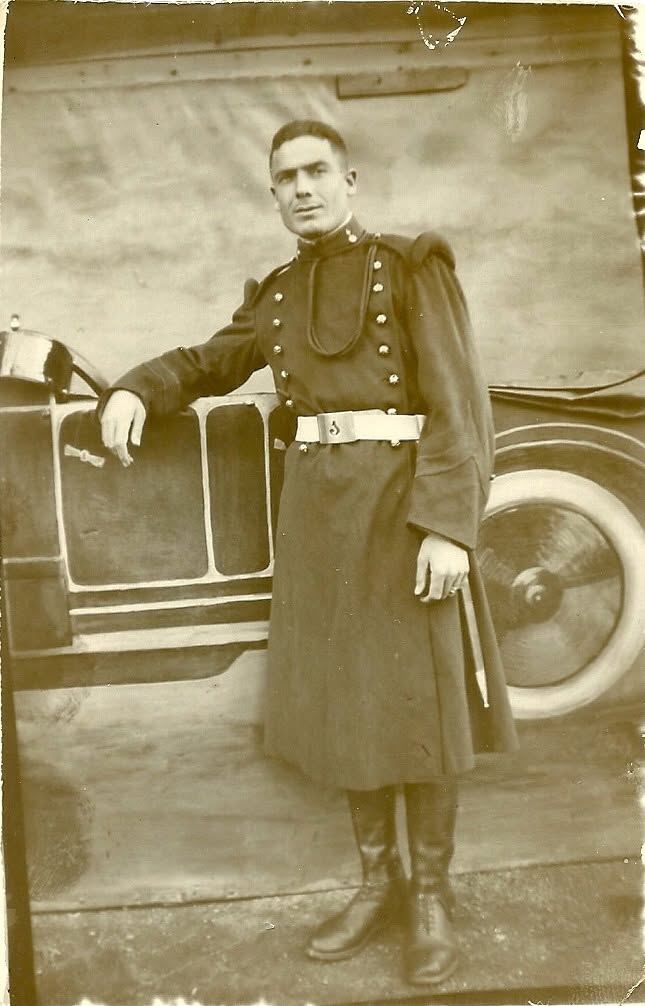
The Spanish Civil War was never just history in my family. My grandfathers and grand-uncles fought in it. My parents grew up in its shadow. Long after the fighting ended, the war remained part of family memory. Decades later, I spent many childhood summers in Spain visiting family, and I still remember being amazed by the sight of big barracks in every city and trucks full of soldiers driving through the streets. It wasn’t something I was used to, growing up in England.
So perhaps I am predisposed to see echoes of Spain elsewhere.
And today, those echoes are strongest in Ukraine.
While researching the wars and technologies that might shape the battlefield of 2036 for Canada at War, I keep coming back to that conflict.
The comparison is tempting. A war that begins in one country becomes an international cause. Foreign governments provide money, weapons, intelligence, and training. Volunteers arrive from abroad. New weapons and tactics are tested under combat conditions. The conflict becomes attached to much larger arguments about sovereignty and the international order. And militaries elsewhere watch very carefully.
That sounds a lot like Spain in the 1930s.
Except Ukraine is not Spain in 1936, and history, as they say, echoes, but it does not repeat itself. However, Spain did play a distinctive role in the years before the Second World War: it exposed some of the technologies, political divisions, and military ideas that would matter enormously when a much larger war arrived.
The question is whether Ukraine is acting in a similar capacity now.
Spain before 1939
The Spanish Civil War began as a domestic political and military crisis, but it very quickly became international.
Nazi Germany and Fascist Italy gave substantial support to Franco’s Nationalists. Germany sent the Condor Legion, while Italy supplied aircraft, equipment, and large numbers of troops. The Soviet Union supplied the Republic with weapons, aircraft, tanks, and advisers. Volunteers from dozens of countries joined the International Brigades, many of them convinced that Spain was one front in a wider struggle against fascism.
Britain and France officially pursued non-intervention, even as other states were intervening openly.
The result was that while the war is often framed as a conflict between ideologies, with the forces of international fascism on one side and the forces of international communism on the other, it became far more significant in the context of the years that immediately followed.
It was, in many respects, a dress rehearsal for the Second World War: a proxy contest between outside powers, a place where new weapons and tactics could be used in real combat, and a warning about the sort of European war that might lie ahead.
Those are three different functions, but they provide a more useful basis for comparison with Ukraine than simply saying that both wars attracted foreign involvement.
Foreign intervention
The international dimension of the Spanish Civil War was unusually direct. With German and Italian forces fighting openly alongside Franco’s Nationalists, and Soviet personnel and volunteers from the International Brigades supporting the Republic, the fiction of non-intervention became increasingly difficult to sustain.
In Ukraine, Russia similarly receives direct support in the form of troops and weapons from aligned nations. Kyiv’s Western supporters, however, have gone to extraordinary lengths to help Ukraine without becoming direct belligerents against Russia. Weapons, ammunition, intelligence, finance, and training have crossed borders on a huge scale. Foreign volunteers have fought for Ukraine. But NATO governments have repeatedly striven to remain below the threshold of direct NATO-Russia war.
The Spanish Civil War internationalized through direct intervention. The war in Ukraine, however, has internationalized largely through support constrained by escalation risk. The reason is obvious: nuclear deterrence. There was no equivalent hanging over Spain. The result, though, is still a war whose outcome reverberates across states that are not themselves formally at war.
The military laboratory
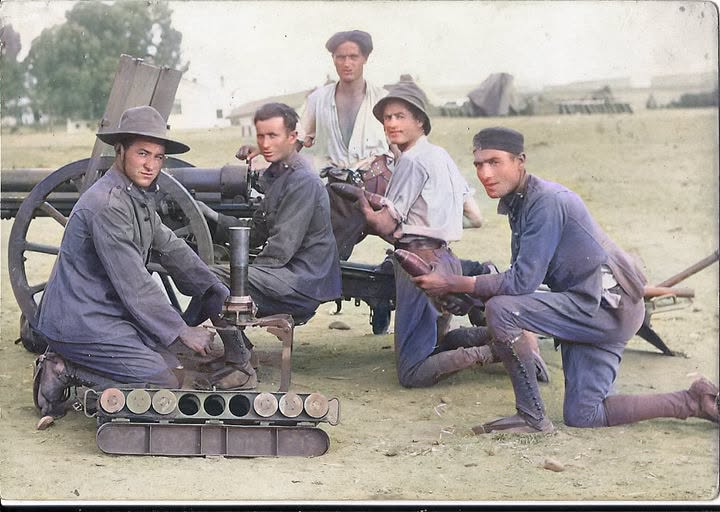
This is where the comparison becomes most interesting. Spain gave Europe’s militaries the opportunity to see weapons and ideas used in conditions that exercises could never reproduce. German air crews gained combat experience. Aircraft attacked cities and infrastructure even as air-ground coordination developed. Tanks were used in significant numbers, and anti-tank tactics evolved in response. Governments and military staffs watched, took notes, and drew conclusions. Some of those conclusions were useful. Some were distorted by what armies already believed.
Ukraine is doing something similar on a far larger technological canvas. Much of the technology we are seeing deployed is not new. Drones, electronic warfare, precision weapons, satellite communications, and digital intelligence all existed before Russia launched its invasion in 2022. What Ukraine has demonstrated, however, is what happens when technologically capable opponents use them against one another continuously and at scale, while both sides adapt.
A small commercial drone can perform reconnaissance that once required a dedicated aircraft or specialist team. A relatively inexpensive first-person-view drone can threaten a vehicle worth millions. Commercial satellite imagery, smartphones and open-source intelligence make large movements increasingly difficult to conceal. Electronic warfare can disrupt navigation, communications and the guidance systems of sophisticated weapons.
Then the other side responds.
Drones change frequencies. Jammers change tactics. Vehicles acquire improvised protection. Software is rewritten. Operators alter flight profiles. A useful innovation can spread across the front remarkably quickly, only to become less useful once a countermeasure appears. That cycle of adaptation may prove more significant than any individual weapon.
Ukraine has also complicated some of the cleaner predictions about modern warfare.
The tank has been declared obsolete repeatedly, yet tanks remain useful. Aircraft are important, but control of the air cannot simply be assumed. Artillery, sometimes treated as a relic of industrial warfare, has consumed ammunition on a scale that has forced governments to reconsider stockpiles and production capacity.
Highly advanced systems operate alongside equipment that would have been familiar decades ago. A military may rely on satellite communications and sophisticated sensors, then discover that jamming has made a simpler solution more dependable.
That became central to the way I thought about warfare in 2036 while writing Invasion.
If I simply take the military of today and give everyone a better drone, I have probably missed the point. The far more interesting question is which improvisations being developed in Ukraine today will no longer be improvisations ten years from now. Which will become doctrine? Which will be designed into vehicles, organizations and training from the beginning? Which will disappear because somebody invents an effective countermeasure? And which lessons will armies learn completely incorrectly?
What are militaries learning?
Wars produce evidence, then military institutions turn that evidence into doctrine, procurement decisions, and assumptions about what the next conflict will look like.
The problem is that they do not do so objectively. Every institution sees a war through the filter of the conflict it expects to fight, the equipment it already owns, the budgets it hopes to protect, and the doctrine it has spent years developing.
Spain showed important pieces of what would follow in the Second World War. It did not provide a miniature version of that war.
The terrain, armies, scale, and political objectives were different. A lesson that appeared obvious in Spain could be misleading when transferred to Poland, France, North Africa, or the Russian steppes.
Ukraine creates the same danger.
Perhaps every future battlefield will be filled with FPV drones. Perhaps not.
Perhaps the tank really is approaching the end of its useful life. Or perhaps the answer is simply that tanks have to change.
Perhaps crewed aircraft will become increasingly vulnerable. Or perhaps new combinations of electronic warfare, unmanned systems and long-range weapons will make them more useful in some theatres and less useful in others.
A Baltic war would not look like Ukraine.
A conflict in the western Pacific certainly would not.
An Arctic conflict would impose completely different logistical and environmental problems.
Nor would a war in Canada look the same.
That is one reason I find Ukraine useful as a novelist but dangerous as a template.
The important lesson may not be that drones have changed everything.
It may be that the rate at which warfare changes has accelerated.
An advantage does not remain an advantage for long once the enemy understands it.
That is a less glamorous lesson, but probably a more durable one.
Where the analogy breaks
There are obvious limits to the comparison with Spain.
Spain was a civil war. Ukraine is resisting invasion.
Spain occurred before nuclear weapons transformed relations between the major powers.
The information environment was radically different. Most people outside Spain encountered the conflict through newspapers, radio, photography, and newsreels. Today, footage from the battlefield can circulate around the world within minutes.
The scale of modern surveillance would have been unimaginable in 1936. So would the degree of economic interdependence between the countries involved. And Spain did not make the Second World War inevitable.
It is tempting, because we know what happened after 1939, to read the Spanish Civil War as though Europe were already moving inexorably towards a predetermined destination.
People living through it did not know that. Neither do we.
Ukraine may be followed by a larger conflict. It may not.
Historical analogies become dangerous when they are treated as timetables. They are more useful as lenses.
What Spain and Ukraine have in common
The most useful comparison is therefore narrower than the headline suggests.
The Spanish Civil War was important because it revealed things that would matter later. It became a proxy contest involving outside powers. It gave militaries experience with technologies and tactics they would use again. And it offered clues about the character of a future war without providing a blueprint for it.
Ukraine is doing all three, too, but that does not make Ukraine a replay of the Spanish Civil War. However, it raises the possibility that historians looking back from the middle of this century will see Ukraine as one of the places where some of the assumptions of their world were first tested under fire.
For someone writing military fiction set in 2036, that makes Ukraine impossible to ignore.
I need to think about what drones look like after another decade of countermeasures. What happens to armour when the battlefield is increasingly transparent. What armies do when satellite navigation becomes unreliable. How countries replace ammunition fast enough. What happens when civilian technology becomes military infrastructure almost overnight.
But there is something uncomfortable about describing either Spain or Ukraine as a laboratory.
Laboratories are places where experiments are performed on equipment. Countries, however, are full of people. My family did not experience the Spanish Civil War as an interesting test of German air doctrine or Soviet armour. They experienced it as something that changed families, futures, and lives. The same is true in Ukraine.
And perhaps that is the final parallel worth remembering.
Looking back, we can see Spain as a place where some of the weapons, tactics, and political assumptions of the next European war were tested. At the time, the people living through it had no such historical distance. They were simply trying to survive a war that had consumed their country.
Ukraine may one day occupy a similar place in the history books. Military staffs will study what worked. Defence companies will build around the lessons learned. Future armies will absorb technologies and tactics that are still being improvised today.
But whatever the next war inherits from Ukraine, Ukrainians are paying for those lessons now.
Invasion, my near-future military thriller set in 2036, is available now in ebook and paperback. Read more about Invasion.